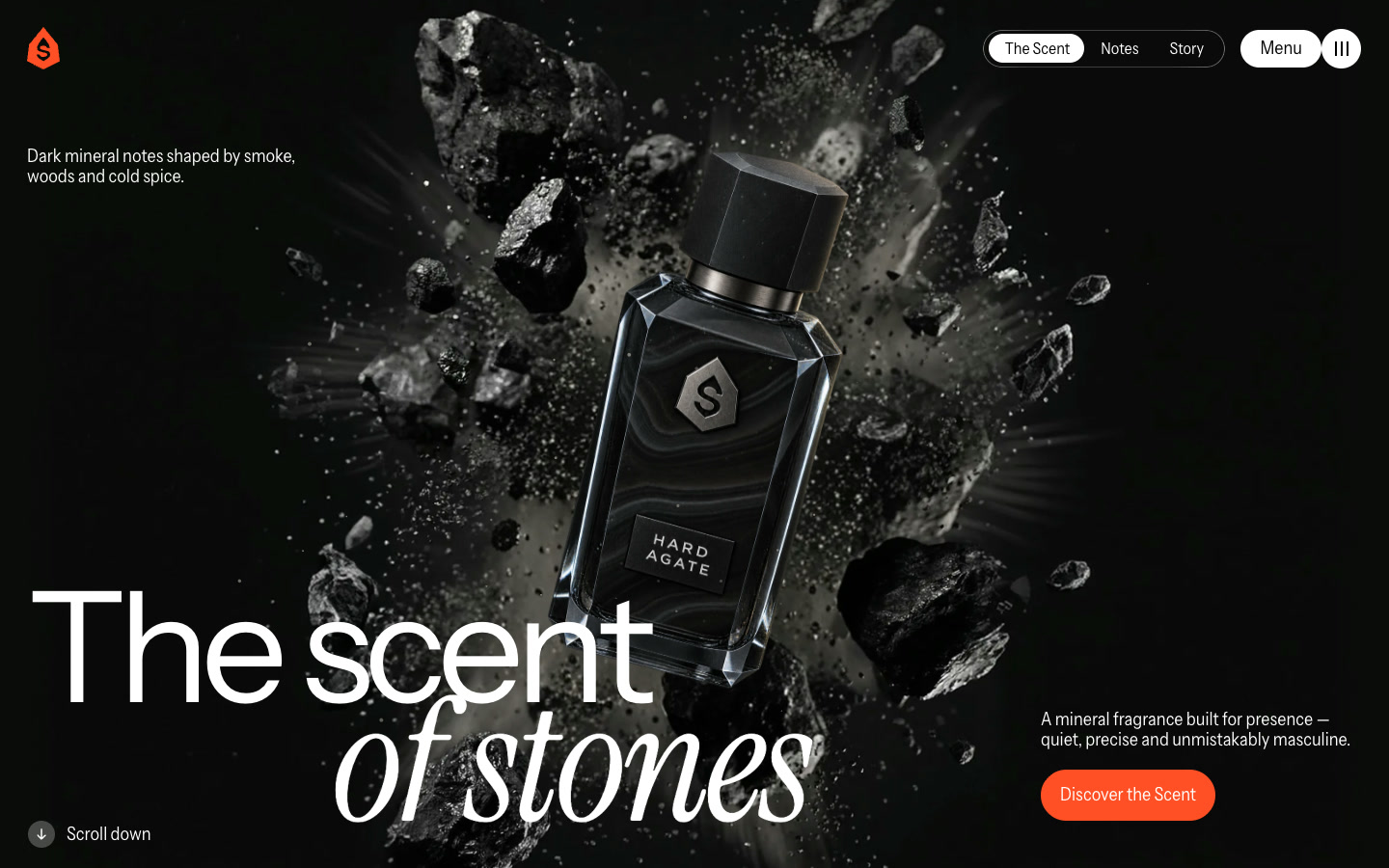
An agency website carries more weight than most, because it demonstrates a service rather than just describing one. A design or marketing agency with a generic AI-built site is making an argument against itself before a visitor reads a single word of copy. That's the specific risk agencies run into with AI website builders that other categories don't have to worry about as much.
The problem is sharper for agencies
If a SaaS company ships a slightly generic landing page, it's a missed opportunity. If an agency ships one, it's evidence. A visitor evaluating whether to hire you for design or marketing work is going to look at your own site as the clearest available proof of what you'll produce for them. A site built from a vague AI prompt, with the same gradients and card layouts everyone else gets, undercuts that proof directly.
What agencies need from a starting point
- The work has to lead, not a mission statement or a process explanation. Visitors want to see what you've made before anything else.
- The visual system has to feel authored, specific type choices, specific spacing, specific motion, not the defaults every AI tool reaches for without direction.
- It needs to be fast to update. Agencies add cases constantly; a site that's painful to update stops getting updated, which is its own kind of evidence.
- It should demonstrate range or focus deliberately, depending on positioning: either show breadth across industries, or show depth in one, but make that choice on purpose.
Why starting from a real design matters more here than almost anywhere else
A generic prompt produces a generic agency site, and for most categories that's merely underwhelming. For an agency, it actively works against the pitch. Starting from a finished, specific design, something with real typographic and spatial decisions already made, is less about saving time here and more about not undermining your own credibility before a potential client clicks past the homepage.
uberdesigner.ai's library is built around that kind of specificity: finished designs with real visual decisions already made, not generic defaults, each one available as a prompt for Claude, Cursor, Codex, or Kimi, a Vite + React project, and a Figma file your team can adapt directly.
A free account covers three templates a day for personal use. Paid plans unlock the full library for commercial and client work, which is the relevant tier if you're using this for actual agency output rather than a personal experiment.
FAQ
Can I use a template as the base for my agency's own site and still look original?
Yes, as long as you're adapting the structure and rhythm to your own content and visual choices, not shipping the template unchanged. Most of what makes a site feel "yours" is the content and specific decisions layered on top.
Should an agency's site show a lot of clients or focus on a few?
Depends on positioning. A few deep case studies usually convert better than a long logo wall, since visitors evaluating an agency want to see depth of work, not just a list of names.
Is it risky for a design agency specifically to use an AI-built site?
Only if it looks generic. Starting from a real, specific design and customizing it thoroughly removes most of that risk, since the result doesn't read as AI-built, it reads as designed.
How often should an agency update its own website?
As often as there's a new case worth showing. A site that's slow to update becomes a liability, since prospective clients notice when the most recent work on display is old.