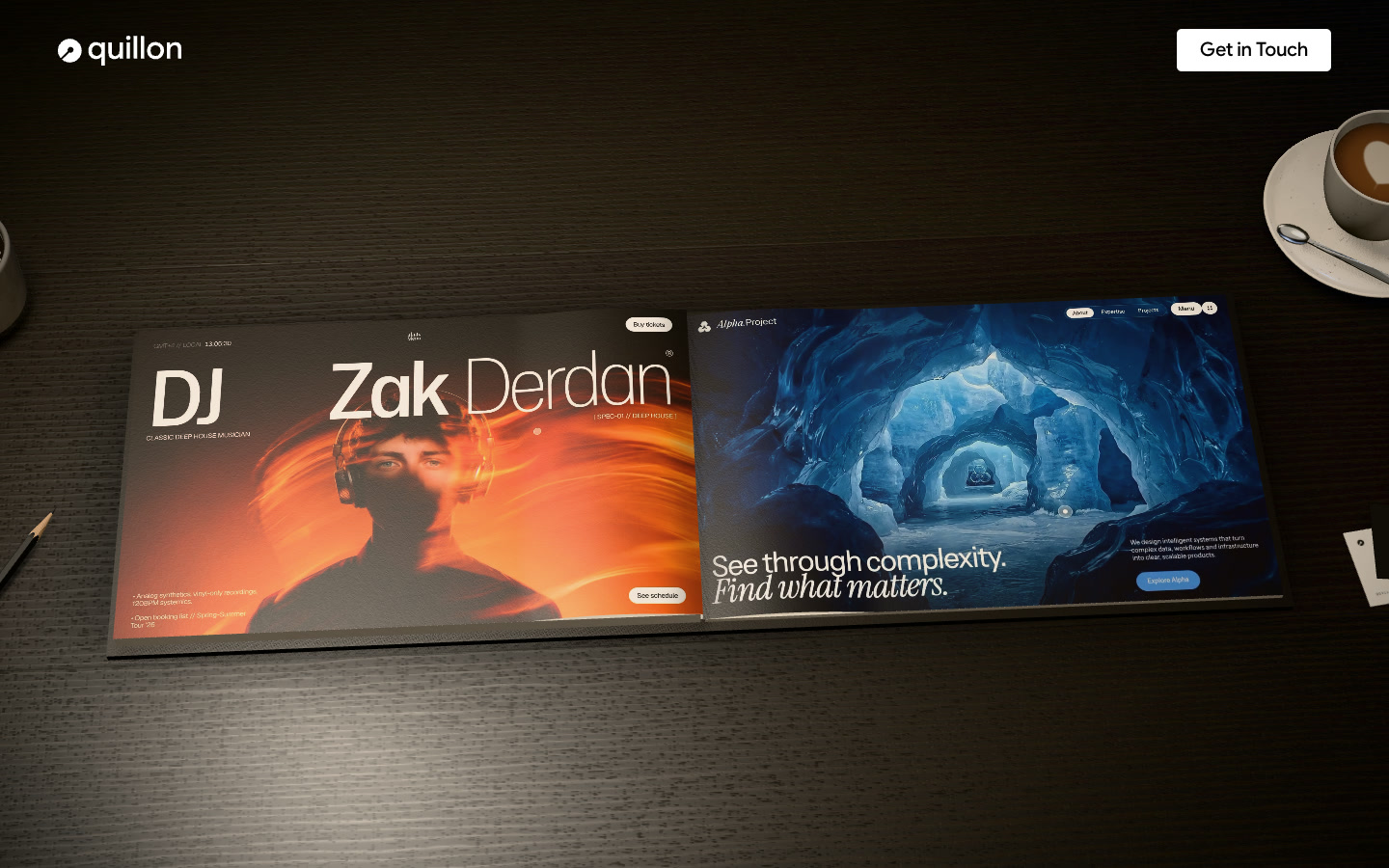
Real estate sells a feeling before it sells a floor plan: the light in a room, the street outside, what it's like to walk in. That's a hard thing to get from a generic AI prompt, because "build me a real estate landing page" has no way of describing light, scale, or atmosphere, the exact things that make someone picture themselves in a space before they've visited it.
Why generic AI output falls flat for real estate
A vague prompt produces a site built around specifications, not experience: a hero image, a list of features, a contact form. That's technically a real estate website, but it reads as square footage and bullet points rather than a place anyone wants to walk into. Visitors scanning listings or developments can feel the difference immediately, even if they couldn't explain why one site feels premium and another feels like a spreadsheet with photos.
The gap is almost always the same one that shows up across every AI-built site category: the prompt described information instead of a visual and emotional experience, so the model filled in the experience with something generic.
What a real estate site needs
- Full-bleed imagery and real scale. Cropped thumbnails in a grid don't convey a space the way a large, deliberate photo or render does.
- A sense of place, not just the building. The neighborhood, the light, the street, the things that make someone choose one location over another.
- Interactive plans and availability, where relevant, so a visitor isn't stuck emailing to ask what's still on the market.
- Motion used for atmosphere, not decoration. A camera move through a space does more work than a static hero image, if it's done with restraint.
None of these are things a one-line AI prompt reliably produces, because they're design decisions, not information to list.
Where to start instead
uberdesigner.ai's library includes templates built around large-format imagery, generous spacing, and interactive layouts, the kind of visual language real estate and architecture sites need, filterable by style and industry so you're not adapting a generic SaaS template into something it was never built to be. Each one comes with a prompt for Claude, Cursor, Codex, or Kimi, a Vite + React project, and a Figma file for a design or leasing team to work from directly.
A free account covers three templates a day for personal use. Paid plans unlock the full library, with no daily limit, for commercial and client work, which covers an actual property launch rather than a mockup.
FAQ
Can an AI-built site show floor plans and live availability?
Yes, if the template or reference you start from already has that kind of interactive component built in. A plain text prompt is unlikely to generate a working interactive plan from scratch.
Does a real estate site need video or heavy motion to feel premium?
Not necessarily heavy, but deliberate. A single well-placed camera move or transition does more than motion scattered across every section with no particular reason behind it.
Can I build a website for a property that isn't finished yet?
Yes. Renders, 3D visuals, and film can represent a space before it physically exists, which is common for pre-launch developments.
Is a template-based approach flexible enough for a unique building or development?
Yes, since the template provides structure and visual language, not fixed content. The photography, copy, and specific layout choices still come from your actual property.